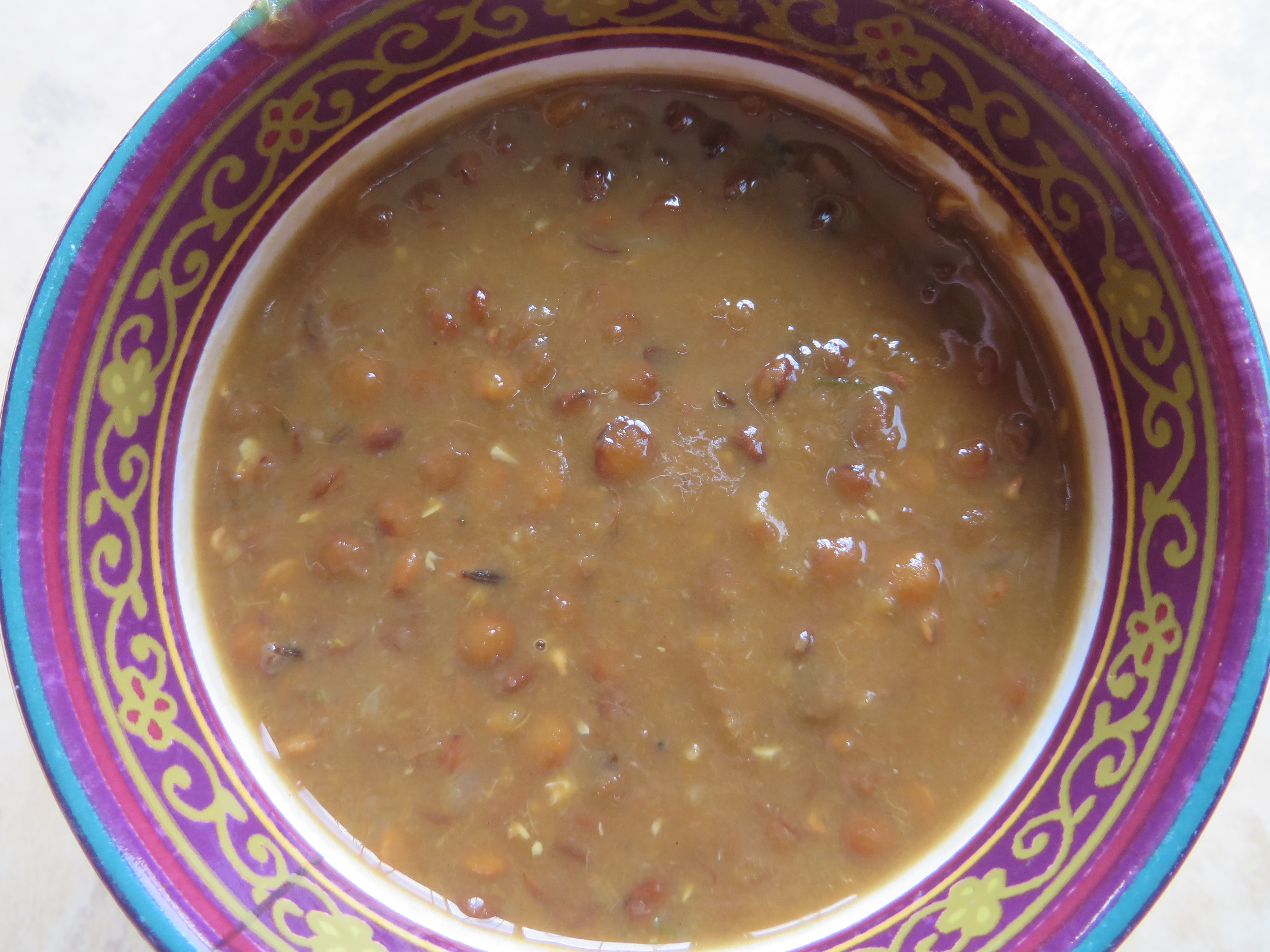
Easy, Indian, yummy: Masoor Dal

IMG_3456

Happy Meatless Monday everyone!

Hope you all had a lovely 4th of July weekend.  Did you BBQ? Maybe you are looking for a Meatless Monday option today after all the gluttony.  Here’s an easy dish to prepare for your family, one that every member, even the littlest ones can enjoy.

Dal, or lentils, are an incredibly healthy member of the food world.  They are packed with protein and high in fiber, not to mention other nutrients.  They are eaten all over the world–India, France, the Middle East–and are considered the ideal baby food due to its nutritional value and ease of preparation.  Dal is versatile too!  You can serve them with just a little bit of salt, any kind of ground spice you can think of, and they take well to onions, ginger and garlic (my personal culinary holy trinity).

Start simple by serving your baby/toddler/child just boiled (or pureed) dal, with no seasoning or a small pinch of salt.  Then, as your little one gets used to the flavor and texture, start adding seasonings–a pinch of coriander powder, cumin powder, garam masala.  Work your way up to the adult version with onions, ginger and garlic.  Personally speaking, I fed my little Kirina a pureed version of whatever my husband I were eating when she was 9 months or so.  She took to it nicely, most likely because she was used to the lentil flavor at that point.

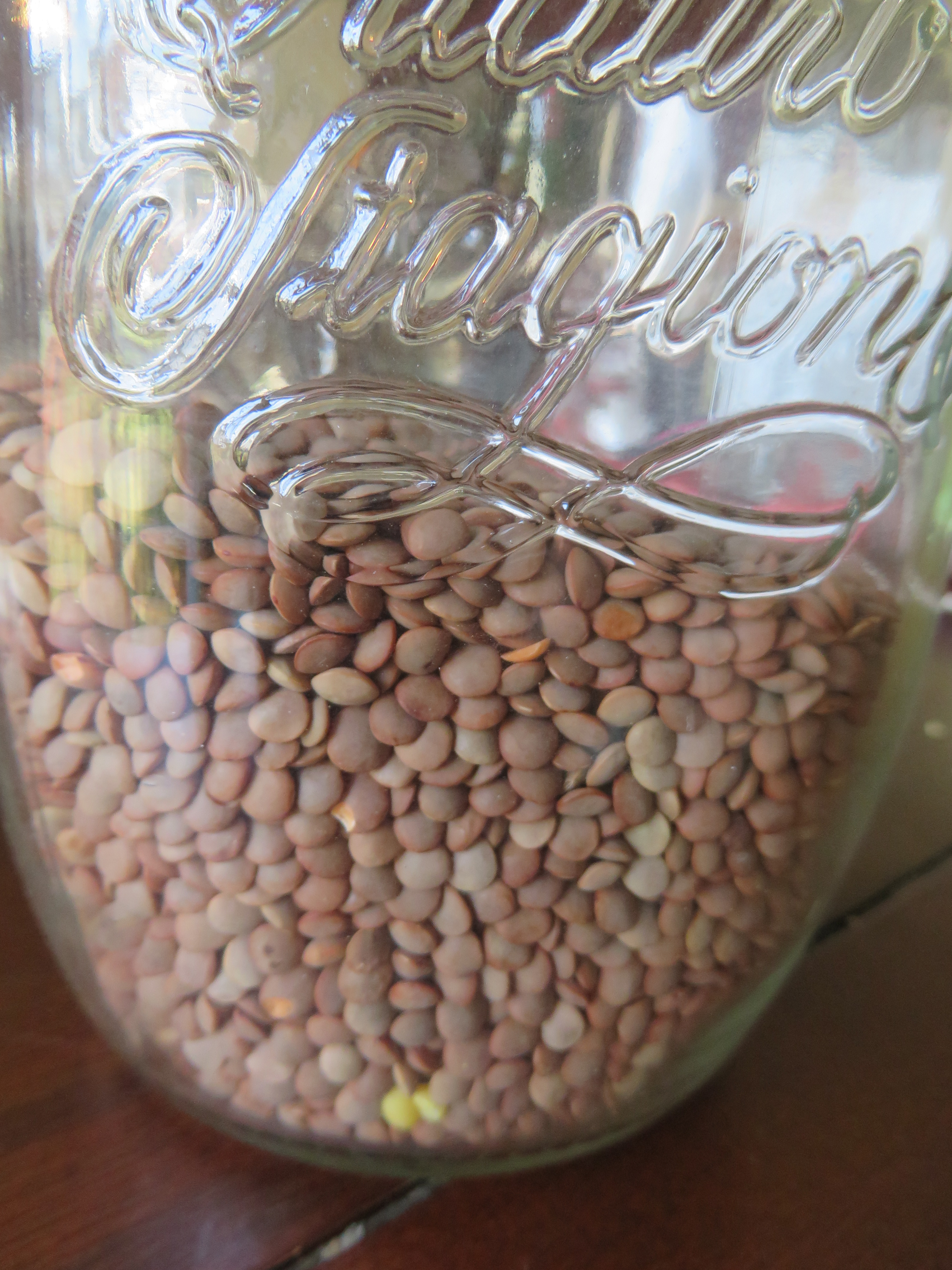
Here’s a recipe for everyone to try.  I used whole masoor dal here, which is a red lentil easily found in Asian grocery stores.
IMG_3449

There is a split red lentil called masoor also, which simply means the lentil is skinned and halved, making for an even faster cooking time (I’ll do a separate post on that in the coming weeks).

Ok, so here goes, with pictures.

1.  Soak your dal for 30 minutes, then boil for 45 minutes until super soft.

IMG_3451

Dried masoor dal

2.  Mince your (my) holy trinity, onions, garlic, ginger:

IMG_3453

3.  Coat a heavy-bottom saucepan with a little bit of oil.  Sautee onions on a medium flame until golden brown, about 10 minutes.  Add garlic, ginger and tomato paste, if using, and sautee until the oil separates from the mixture, 10-15 minutes.

4.  Add spices.  This part is up to you…traditional preparations call for a teaspoon each of garam masala and/or coriander and cumin powder, along with 1 teaspoon of turmeric and chili powder and salt to taste.  Select your baby’s adventure level and add to mixture. Cook for about a minute.

20131105_160923-2.jpg

My spice tin

5.  Add boiled dal and simmer for 5-10 minutes to allow flavors to come together.  Add water to thin out if necessary.

6.  Dal is ready! Puree for small babies and leave as is for older children and adults.

IMG_3460

From Kirina’s highchair to your little one’s bon appetit!

Watermelon Agua Fresca

Happy almost Fourth of July everyone!

We are sooo excited about summer over here! It is in full swing and full of fresh fruits and vegetables.  In my previous posts I mentioned loving this time of year because it enables my little Kirina (age 3) and I to visit farms and pick all sorts of yummies, from berries to peas to melons.

We discovered this concoction after one of our hot afternoons outside: Watermelon Agua Fresca.  Sooo good! Agua fresca in Spanish simply means “juice made with fresh water.”  What a great way to beat the heat.  Also a great way to introduce some herbs.  Mint has been the herb of the week over here…it just sings summer! Kirina enjoys picking it and I enjoy muddling it into a mohito (did I mention babies make us want to drink? 🙂 ).

This agua fresca recipe is barely even a recipe and can be worked into any BBQ party you are having this weekend.

Recipe:

Ingredients: 2 cups watermelon + 1 leaf fresh mint

Method: Blend together 2 cups chilled watermelon chunks with a few spoonfuls of water.  For babies, simply puree and serve.  For toddlers, add more water to make a refreshing drink that they can drink out of a straw.  For adults, well, you know the drill.  Find some alcohol and add slowly. 😉

Um, yes, that is it.  I wish I had a picture.  It all happened so fast I didn’t have time to grab a camera.  I’ll leave you with a summery picture of my almost four-month-old instead.

20140608_140407

From our highchair to yours, bon appetit!


From farm to highchair!

20140620_171025

Happy Summer everyone!!

Oh my goodness, what FUN we have had here in the Saini household lately! There are sooo many great fruits and vegetables in season right now, I can’t even contain my enthusiasm.  Being a country mouse myself (I grew up in New Hartford, NY, a beloved little town near rolling hills and lots of farmland) I grew up picking strawberries with my mom in June and blueberries with my dear friend Meigan and her mom in August.  Come Fall, we all went nuts for apples and freshly pressed cider (back in the day when it wasn’t pasteurized and tasted sooo good!). My mom had her own vegetable garden, full of tomatoes and green peppers.  What happy memories they were.

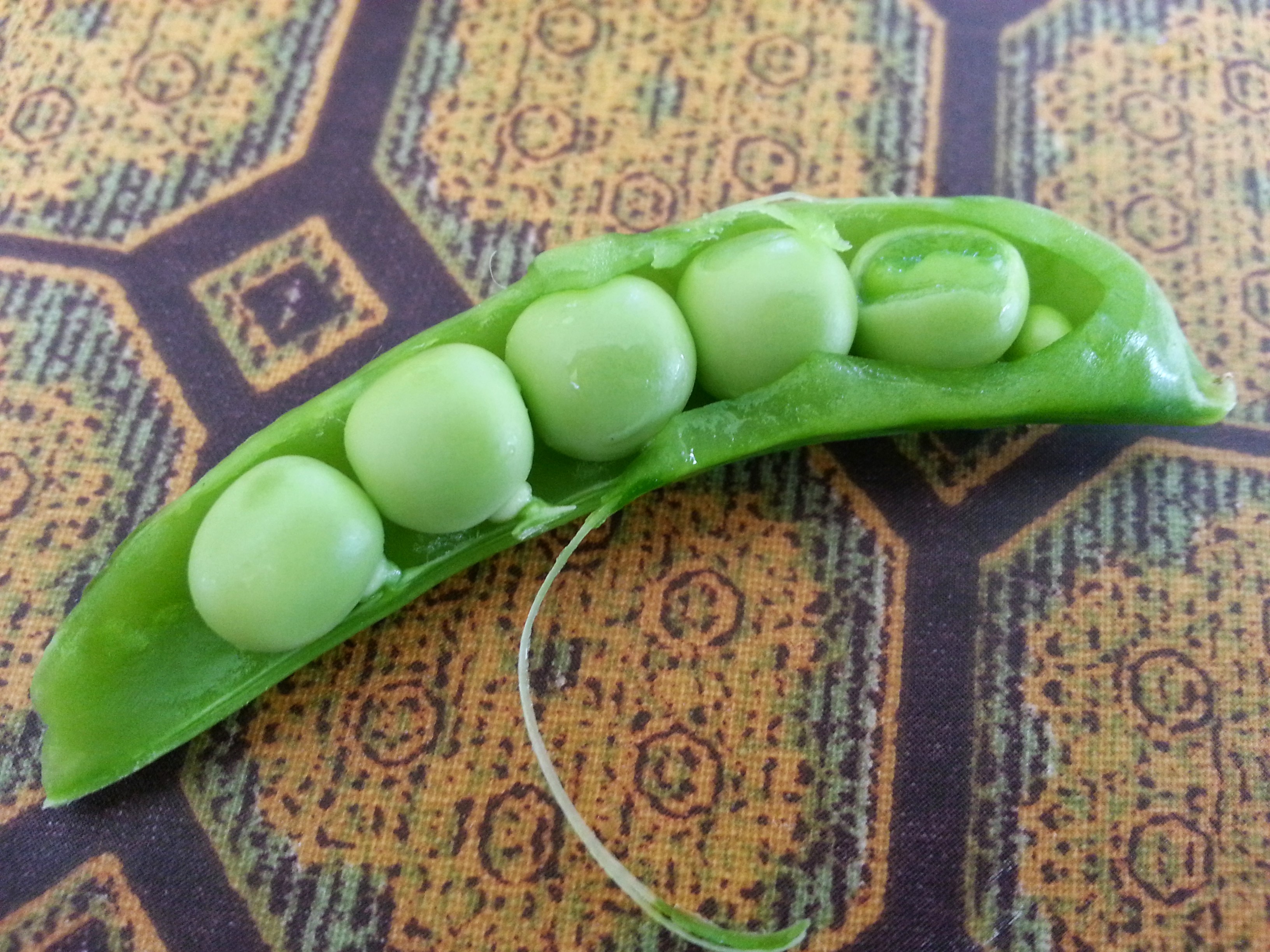
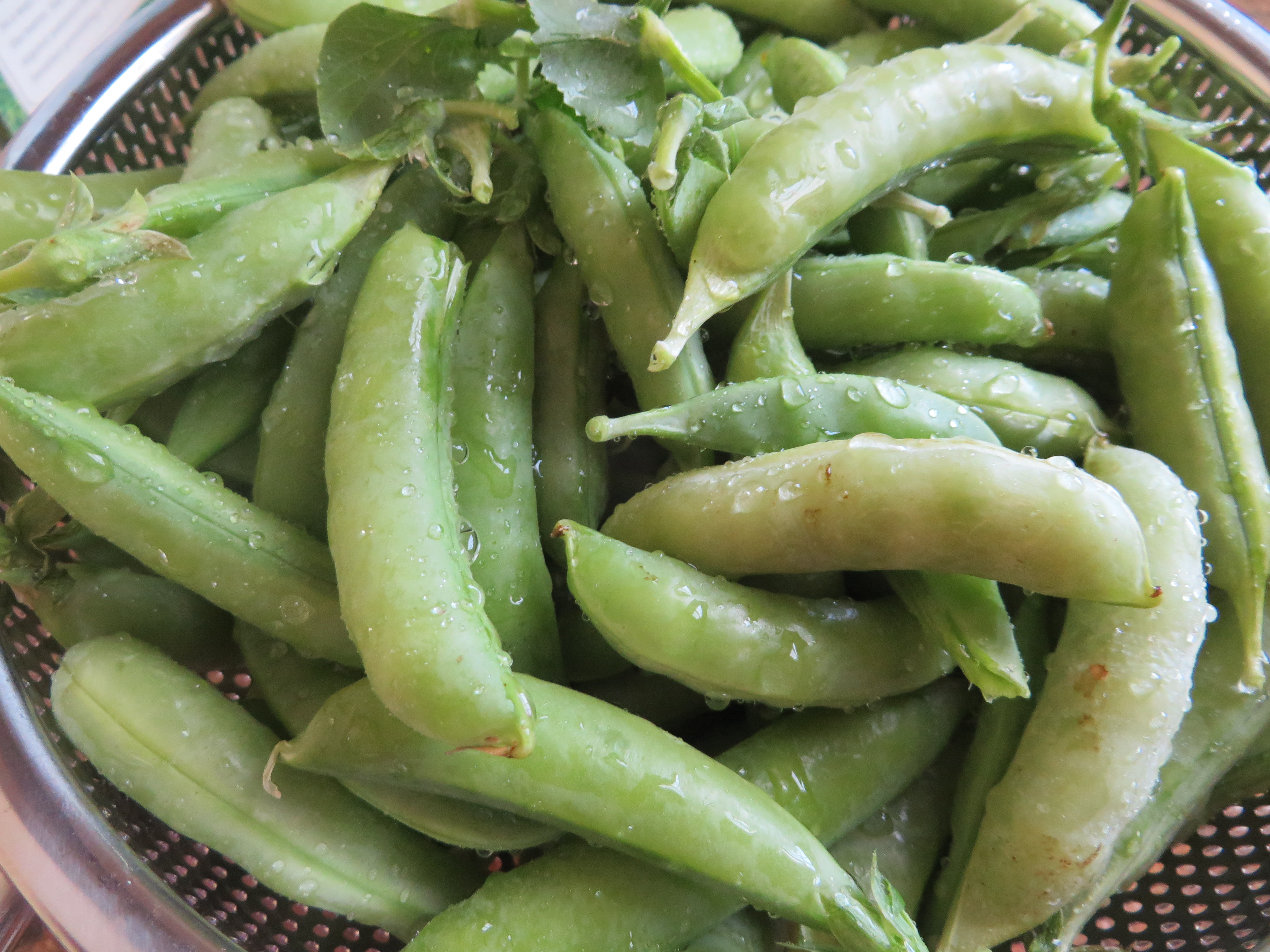
My mom passed away 8 years ago and it is now a bittersweet thing to do, but I was determined to pass this love of farm-picked fruits and vegetables to my little Kirina.  There is something so pure and precious about teaching a child where their food comes from.  I think it made Kirina enjoy the food more because she had a hand in picking it.  The peas, pictured above, were such fun to pick.  We’ve kept them in a bowl in the kitchen and Kirina grabs them now and then to munch, having fun peeling away the pods and searching for the sweet peas inside.  It’s pretty fun to watch her.

20140620_170626

Kirina picking out peas

Freshly picked!

Freshly picked!

Peas with a Hint of Mint

     Way back when (ok, not that way back, two years ago) when I was pureeing baby food I took the freshly picked peas, shucked and steamed them, and blended them with a bit of fresh mint leaves.  It was simple and divine.  And different! Peas adapt well to a whole array of seasonings, so be sure to try out different ones–oregano, basil, even a pinch of ground black pepper.  The sweetness of the peas, particularly when they are young and freshly picked, makes it a great vehicle for introducing new spices to your little one.

   Am looking forward to more summertime farm finds.  And little Ela is almost four months old! That means she will be ready for solids soon.  Can’t wait to introduce her to the tastes of the world.

From Kirina’s highchair to your little one’s, bon appetite!

Cantaloupes and Cardamom

IMG_3283

Minced cantaloupe sprinkled with cardamom

When I was little my mom always served this combination at dinner, particularly when we were eating Indian food.  Since Indian food always has a mad amount of masala going on, something cool and refreshing provides the perfect balance.  For children, it’s also like having a little dessert along with dinner (which I remember as feeling pretty special, like I was getting away with something).

The recipe is super simple.  Simply mince some cantaloupe and stir in a pinch of ground cardamom and a pinch of sugar (you can omit this if your cantaloupe is particularly sweet).  The key to this dish is the way you cut the melon–mincing it allows the juices to accumulate, which when combined with the cardamom makes for tasty sips at the bottom of the bowl.  The other key to this dish is serving it well-chilled.   Refrigerate for 15-30 minutes before serving.  The juices will have enough time to accumulate and the cold enhances the summery taste of the dish.

Puree for very small babies, serve as is for toddlers and kids.  What a great way to introduce a new spice!

Enjoy!

Peaches and Herbs

IMG_3197

Hello everyone!

If you read the title of this post and thought of a music duo then you are a well-seasoned human being (that’s a nice way of saying that you’re old, ha ha.  Don’t worry, I myself am ancient. I grew up in the 80’s).  (For those young ones who are puzzled, Peaches and Herb was a popular music act in the 1970’s best known for their hit, “Reunited”).

Ok enough kidding around. I’m here to write about peaches! Peaches and baby food to be specific. Our local orchards and my favorite grocery store Wegmans, have a lot of juicy, ripe peaches on hand.   May and June are typically peach season, depending on where you are.  Where we live, lovely Jersey Peaches are available starting late June and can be picked right off the tree until August.

Making baby food from peaches is not only easy, it’s delicious.  And beyond that, there are excellent ways to spice up your peaches! Often when you look in the baby food aisle at jarred or pouched food, you see a peach mixture of some sort, but never anything that resembles how an adult would eat a peach if they were cooking it.  Peaches can be grilled, with a little sage, they can be cooked with spices into a sublime chutney, and they can be eaten for dessert as a melba or cobbler, scented with spices like clove and nutmeg.  Why can’t your baby have a taste of what you are having? Here are some creative ideas for introducing your little one to seasoned fruit:

IMG_3201

Peach and Ginger Chutney for babies

Peach-Ginger “Chutney”

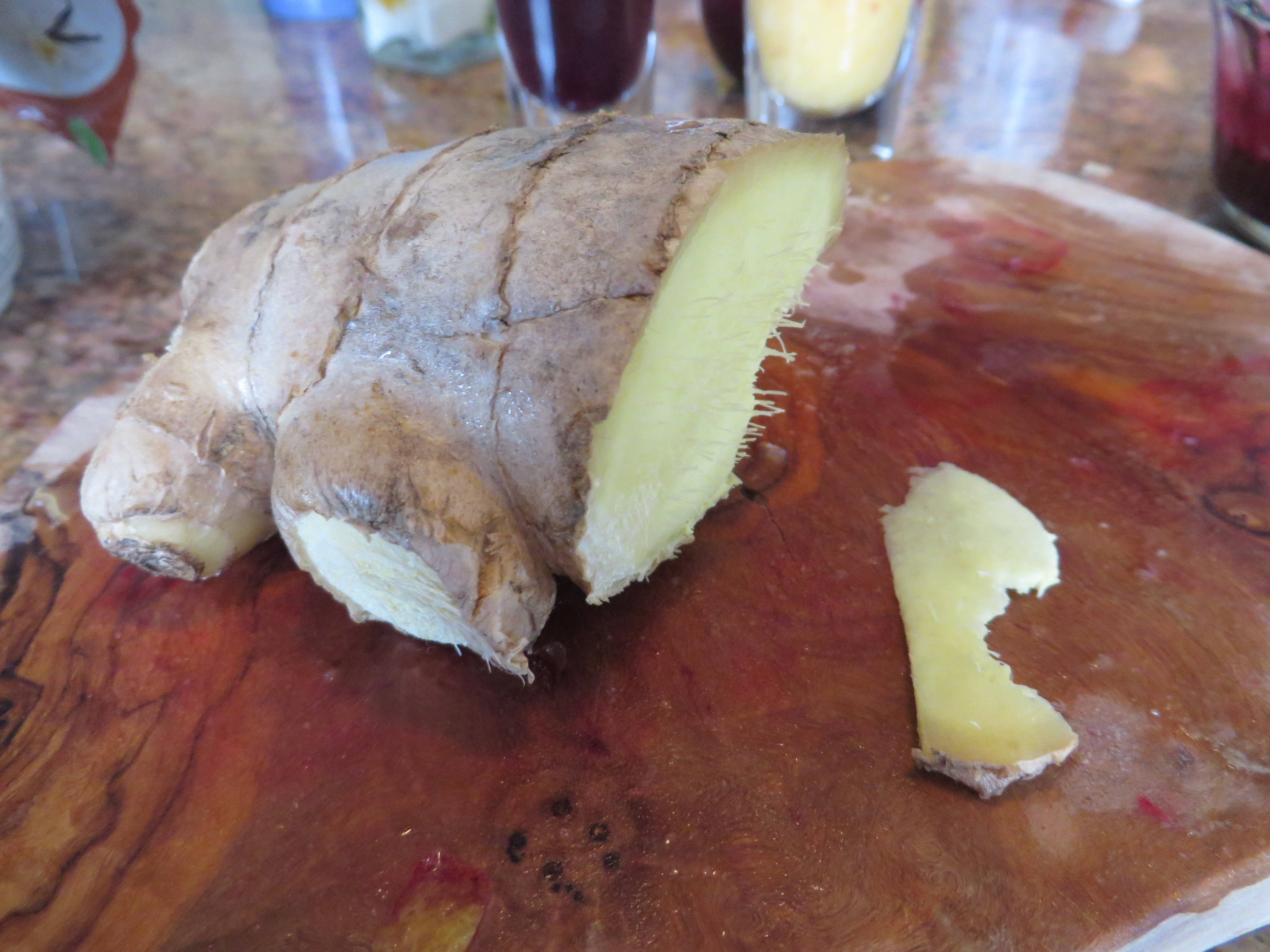
This recipe is so simple! And healthy.  Traditional chutney preparations call for a good heaping of brown sugar, which I’ve omitted here since we are focusing on babies and toddlers.  In a small saucepan, simply combine 2-3 peeled and sliced peaches, 1 teaspoon of water and 1/8 teaspoon (or so, you can add as much as your baby likes) freshly minced ginger root.

Add, if desired, a few drops of lemon juice for some brightness.  Simmer together for 5-7 minutes, stirring frequently.  You can add a pinch of all or some of the following while cooking: ground clove, ground cinnamon, ground nutmeg, or, my favorite, garam masala.  You can also simply start with ginger and work your way up!  Let cool and serve.  For babies, puree in blender for smoother consistency.  For toddlers, serve as is, spread on crackers, or dress on a piece of turkey or ham.

IMG_3208

Fresh ginger root


Roasted (or Grilled) Peaches with Sage

Rinse 4 peaches and wipe dry.  Cut into halves and remove the pit.  Rub flesh with a tiny bit of butter (optional for very young babies) and place 2 sage leaves into each cavity.  Arrange in a baking dish skin side down and roast at 375 degrees for 30 minutes (or until flesh is extremely soft).  Allow peaches to cool and remove sage leaves.  For babies: scoop out sage scented flesh and puree.  For toddlers, scoop out flesh (or let your toddler scoop out flesh) and go to town.  Grilled peaches also have a unique and different flavor profile.  To do, simply place peach halves on grill and cook until soft, taking care not to overly char the fruit.  Rub cooked fruit with sage leaves and serve (pureed or chunks) accordingly.

Peach and Basil Puree

Steam or roast peaches (2-4 depending on what you want) until soft.  Puree with 1-2 fresh basil leaves.  This is a super summery mix that is a great way to introduce your little one to basil.

Chili (or Paprika) Peaches

You read that right! Babies in several parts of the world routinely eat chili powder (Mexican babies eat avocado with chili powder and lime juice for a snack and it’s considered totally normal).

Spiced Peach Cobbler

Finally! Dessert! What baby won’t go for this one? Cobblers are wonderful dishes that allow you to use a lot of familiar spices.  To cooked peaches (steamed or baked) add a pinch of ground clove, cinnamon and nutmeg.  You can also add a pinch of pumpkin pie spice instead.  For babies, puree and serve.  For toddlers, you can drizzle a bit of honey and/or add some brown sugar during the baking/steaming process.

So excited for summer.  Lots more recipes on the way and little baby Ela will be starting solids soon.  Stay tuned!

From Kirina’s highchair to your little one’s, bon appetite!


Balsamic for Babies?

Image

Freshly picked summer strawberries

Hi everyone!
Kirina picked these strawberries all by herself! Here in the Garden State we are lucky to live near such amazing farms, all full of fresh, homegrown fruits and vegetables.  Our favorite farm, Terhune Orchards, has a cute “read and pick” event every other Tuesday this summer.  It was so much fun! Was a bit hot, but we picked a little pint together (while I had the other little pint, Ela, 8lbs, strapped on me.  Wearing a baby and managing a toddler picking (eating, smearing) strawberries in the heat is not something I would recommend).  🙂

Farmer Kirina

What to do with all these strawberries?? Obviously, they are delicious and sweet on their own (particularly since they were locally grown), but there are tons of creative ways to feed them to your little one. Ideas to try:

1.  Strawberries & Balsamic Vinegar

Balsamic for babies? Yes! This is an unbelievably tasty combination for grown-ups and your little one shouldn’t be deprived.  Strawberries are a great vehicle for introducing a new flavor to your little one.  For toddlers, simple mix a few drops of your favorite balsamic into a bowl of chopped strawberries and serve.  For babies (over 9 months), take about a cup of strawberries, chopped, and steam them for five minutes (a steamer basket is best for this).  Puree in a blender, adding a few drops of water if necessary.  Add a drop or two of balsamic and serve! For an even smoother consistency, strain the strawberry mixture before adding the balsamic and serving.

2. Strawberries & Mint

A pinch of mint offers a nice, fun, refreshing flavor! Simply take 1 or 2 fresh mint leaves (or a pinch of dried) and add to your strawberry puree or chunks as prepared above.

3.  Strawberries & Lime

One of Kirina’s favorite combinations! For toddlers, a small squeeze will do.  For babies, start with a drop or two and work your way up.  A little does go a long way.  For mommies, I encourage you to muddle some strawberries, add ice, a squeeze of lime, tonic or soda water and vodka.  No, I am not kidding.  Children, as lovable as they are, make you want to drink.

4.  Strawberries & Cardamom

Definitely more unusual, but since cardamom pairs so well with sweet fruits and desserts, a pinch of this ground spice really enlivens a strawberry mash.  As always, using a familiar ingredient as a vehicle to introduce your little one to a new spice or flavor is helpful.

5.  Strawberry Ginger Yogurt

For babies who are taking yogurt, puree strawberries with a thin slice of fresh ginger root, then add into the yogurt.  For toddlers, you can create a yogurt parfait, layering pureed strawberry and ginger in between layers of yogurt, or simply use the baby version and mix everything together.

From Kirina’s high chair to yours, bon appetit!
Mango Season Is Here!

A spoonful of the season

A spoonful of the season

Hello Everyone,

MANGOS! Or is it mangoes with an “e?”  Jury is still out on that one (grammar folks help out on this one).  Anyway, mango season is upon us! Every April, May and June this wonderful season takes over, particularly for Indian and Indian-American households who are mango-crazy.  When I say crazy, I mean crazy! Whole festivals are created around this fruit in India.  It is sometimes called the hundred days of madness, in fact, in reference to the brief amount of time this prized fruit is in season.

My parents came here in the 1970’s and one of the things they missed most was the Indian mango.  My mom would tell me stories about how my grandmother would spend time pickling unripe mangoes, setting the jars out on the veranda so that the hot Indian sun would work its magic, heating the jars and preserving the newly jarred jewels.  I also have childhood memories of my parents, once they finally found mangos in this country, eating the juicy, fleshy, fruit over the sink because it was so messy! Every Indian-American kid probably has the same memory.

But it isn’t just Indian folks who have a fondness for the fruit.  Caribbean and Mexican cultures adore the fruit as well.  The only debate is over which mangos are tastier.  True Indian mangos, called Alphonso mangos, have been denied an entry visa for years from the US government (something to do with pesky insects they carried) until recently (they can be found for way too much money now in Indian grocery stores).  Other mangos, like the Kent and Ataulfo varieties are more commonly found in US markets and are grown in Florida and Mexico.  These are just as tasty when ripe…look for sweet-smelling, soft fruit when selecting.

Ripe Mango

Baby Food

If your baby is lucky enough to be starting solid foods during mango season, this is an amazing fruit to try! Simply cut into chunks and blend until smooth.

Mr. Teacup takes a taste of mango saffron puree.

Adding Flavor to Baby’s Food with Saffron

What could be better than simply mangos? Adding a pinch of saffron!  Saffron is a mild, gentle, but flavorful spice that comes from a special orchid flower.  It is used in everything from warmed bedtime milk, to Indian and Middle Eastern desserts to the famous Spanish Paella (it is what gives paella its bright orange color).

Saffron and mango are buddies…they taste amazing together.  Dissolve a few saffron threads in a few teaspoons of warm water.  You will notice the color coming out.  Add this to your mango chunks when blending and your puree will be imparted with a beautiful, exotic saffron perfume.  It is a wonderful way to introduce your baby to a new spice.  Kirina loved this as a baby and I can’t wait to try it on Ela when she is ready to start solids.


For toddlers, you can add the mango-saffron puree to a cup of yogurt in a bowl, or blend to make a smoothie.  YUM!

Keep those taste buds growing!  With summer upon us and fruits coming into season it is a fun time to experiment and introduce new flavors to your little one.

From Kirina’s high chair to your little one’s, bon appetite!


Have your taste buds grown up yet? Maybe one day they will!

Hello Everyone!

What an interesting foodie household we have had here in the past few weeks.  Kirina is almost three and Ela is almost 3 months.  Kirina, my original “ethnic baby” (aka guinea pig for recipes from my please-let-me-get-published-soon-book) is in toddler-eating mode and Ela is in full-on nursing mode (forming her own tastes through breast milk based on what I eat).  Mommy and daddy eat when we remember to, often late-night suppers once Kirina is in bed and Ela snoozes in my lap.

The main dinner table drama these days involves dear Kirina, who, as a toddler, has her own will, her own wants and her own tastes.  Which would be fine, except her tastes involve graham crackers with cream cheese, grapes, and hummus with strawberries….over and over and over and over and over….and over again.   Coming from someone who craves variety on a daily basis, I just don’t understand how this little munchkin of mine can have such a boring (to me) diet.  She used to love variety, but has now settled into a sort of cracker and dip complacency.

Which is why I keep introducing new tastes, just so we keep up the habit.  The other day we were eating an eggplant and potato curry, two vegetables that she hasn’t warmed up to (yes, she is the only child on the planet that does not like potatoes.  she will not take them mashed, she will not take them fried, she will not take them baked, broiled or otherwise, Sam I Am).  The vegetables were cooked in an onion, tomato and yogurt gravy and sautéed with spices such as cumin, coriander and garam masala.  She took a small spoonful and made a face.  Not a happy one at that.

The title of this post is based on some words from my dear friend Valerie, who shared this wonderful (non-chicken) nugget of advice that she tells her own children when it comes to new foods or flavors.  Which we promptly said to Kirina when she made her yucky face:

“Maybe one day your taste buds will grow up and will like potatoes later!”

Oh my goodness, this sentence was great! She started asking us if taste buds grow like hair (hair?) and we told her yes indeed, taste buds grow like everything else! And truly they do.  Imagining taste buds like any other organ in the body helps to understand…they, like other body parts, need time and nurturing to mature and grow.  Only with taste buds they grow to appreciate new tastes and flavors.   We have used this sentence with Kirina for all sorts of things she doesn’t have a taste for yet–olives, squash, eggplant.  And the key is not giving up.  I always ask Kirina to taste everything, especially if it is a new ingredient, usually telling her she doesn’t have to like it, but she at least has to try it.  Now with this new bit of advice about her taste buds growing up, she really does try harder to taste new things.  She’s excited by the concept of things growing and this helps her relate to new things instead of just shutting down the idea, as many toddlers are prone to do.

Motherhood is SUCH a day-by-day learning experience.  I never fully feel like I know what I’m doing or if I am doing it right (no matter the topic).  Little nuggets of advice from other mommies surely helps lead the way.

From Kirina’s highchair to yours, bon appetit!

Have an ear? Make it spicy!

Hello all!

Hope everyone’s Friday is going well! Had a fun snack from Kirina’s table this week to post.  I was thinking a lot about my mom, particularly since Mother’s Day is coming up (she passed away 8 years ago this June.  I miss her loads, and miss her cooking just as much).  We had a few rainy days here and it made me remember an Indian snack she used to talk about a lot from her childhood.  She said she would eat it during monsoon season in India, a terribly wet and muddy time in Western India.  I’m not sure what the official name of this snack is, but it involves fresh-roasted ears of corn and spices.  My mom said it was a nice, warm, treat when you felt cold and wet from the rain.

I thought Kirina would get a huge kick out of this snack (what kid doesn’t like eating things off a stick or a cob of some sort?) and also she could eat something from her grandmother’s kitchen and we could remember her that way.  It’s an easy snack and there are variations with the spices.  You know we are all about spices here when it comes to babies, toddlers, and adults! No one is too young to experience zesty food if you ask me.  So here goes…try this out on your little one and see how it goes.

Start with an ear:

This one happens to be sweet Jersey corn (New Jersey is the Garden State after all.  We are not just Newark Airport).

Make the corn naked (shuck the corn) and place on a medium flame on your burner if you have gas.  You do this on an outdoor grill as well.  And my mom only had an electric cooktop and somehow made it work too (stick to medium heat).

Keep rotating the cob until you start to see browning (be careful not to char too much.  though if this happens, it’s ok, just lightly rub it off with a paper towel).

Next, get your spices ready.  I tried to take nice pictures, but, as usual, they kind of turned out blurry, or in this case, just plain creepy, lol:

Image


I told you it was creepy. 🙂  This is my grandmother’s cutting board.  My grandmother! Her name is Gigi, and she is amazing.  Anyway, what you see on the board is paprika, chili powder, salt and lemon.  That’s all you need!

Here’s what the roasted corn looks like when cooked (the steam kind of messed up the picture):

Image

In a separate plate, take the roasted corn and rub all over with lemon first, then salt. And here is the variation…rub with paprika for a toddler just trying this snack out.  Adults eat full-on chili, and so do children in India who are used to the seasonings.  With Kirina I’ve started her on paprika because it is a mild chili flavor, and now we do a mixture of paprika and chili as she gets older.  That’s the great thing with introducing your little one to spices…it’s easy! And you can vary the amounts and strengths as your little one gets older. The goal for us is always to expose Kirina to new tastes so she gets used to all the yummy flavors of the world.  How did she like it?

Image


It was a hit! Though she didn’t like getting corn stuck in her teeth and we had some adventures with dental floss, but hey, I guess it got her to like dental floss and brushing more, so it was an added bonus!

For you adults who are curious, this is a flavorful way to prepare corn without the fat of butter (even though butter is totally my best friend).

Good luck and hope your little one finds it tasty.  From Kirina’s table to yours, bon appetit!


Got milk? If you don’t read this!

Happy Friday everyone!

Hope everyone is finally enjoying some sort of nice weather across the states.  Here in New Jersey we have had a wacky mix of rains, floods, and finally sunshine.  As soon as I post this I’m taking the little ones outside.

So normally I’m whipping up different meals for Kirina or thinking up ways to spice up baby food.  But baby Ela, our newest addition, could care less for such things at the moment.  To put it bluntly, she’s into milking the cow.  That would be, um, me.  Yes, that is what I basically feel like these days.  🙂  It is pretty nice nursing a baby actually, especially since I couldn’t do that with Kirina (she was in the NICU for many days, hence we had a breastfeeding crisis of sorts.  Actually it wasn’t a crises, it was a total nightmare! Pumping an ounce or two, supplementing with formula, feeling unnecessarily guilt-ridden for all of the above.   Ugh!).  Ela came into the world looking for milk…I had not experienced anything quite so natural before.  She is a nursing addict.  🙂

Having had both rocky and easy breastfeeding experiences, I thought it would be worth writing about what to do when you are not having such an easy time with milk supply.  I learned a lot the last time around and since we are discussing all things spices and global, sharing some insights might help other moms out there.  There are things to learn from all the global mothers and grandmothers out there.

For instance, spices are not just for cooking!  Meet my friend fenugreek:


One of the oldest and most common methods for increasing a mother’s milk supply is by eating fenugreek seeds, which come from a plant cultivated largely in India, but also in Egypt, Turkey and Morocco.  The above is a close-up of what the seeds look like.

Below is me trying to take creative pictures and failing:

This reminds me I need to sign up for a photography class.  Or something.

At any rate, fenugreek, or methi, as we call it in India, is used primarily in curries in India, Persia and some other Middle Eastern curries.  Usually the seeds are ground into a powder and used in a spice mixture to season the curry.  The leaves of the plant are often folded into roti (Indian flatbread) for an extra dimension of flavor.

Medicinally, fenugreek is a known…(get ready)… galactagogue.

Say that 5 times fast and you get a prize!

For us normal, SAT-flunking humans, all this means is that fenugreek has properties that are known to increase lactation in nursing mothers.

The first time I heard this I thought it was an old Indian grandmother gimmick (other gimmicks include eating yogurt while you are pregnant so your baby is born with “fair skin,” but that is another post and topic entirely, and one that makes me too angry to talk about…people, ahem, out-laws, need to stop giving such ridiculous “advice”).  Anyway, after a lot of research I discovered that fenugreek is commonly used all over the world for mothers struggling with milk supply.  How cool!

Does it work?

Yes! Though my results were sort of all over the place.  I think the problem was that I stopped doing it regularly.  Friends who have done this regularly have seen remarkable results.  Their supply increased by almost 50% which is huge!

There are ways to take fenugreek.  First of all you have to ask your doctor what to do because, as a lawyer, I know I can’t dole out medical/herbal advice without getting my ass sued. 😉  But from my own experiences, you can either find fenugreek capsules in a health food store, or go old school and whip out your methi seed jar from your cabinet:

Don’t have this stocked? Most of us don’t! Any Indian or Asian grocery store can help you out there.  I took a tablespoon of seeds and soaked them in water overnight, then gulped the mixture down the next morning.  Yes, this might sound off-putting, but the taste is not so bad and it goes down quickly.  Lore and research suggest that you need to do this many times a day until (stop reading if you are going to get grossed out) your pee smells like maple syrup (no, I’m not kidding).  If you hit this point, you are ingesting enough.

Some women see an increase in milk production overnight, some need to add pumping sessions to increase the seeds’ effectiveness, and still others can’t rely on just seeds alone (they need the supplements).  Regardless, I think it’s pretty cool that a spice has such power and that before pumps and related gadgets were invented, this is how women dealt with things.  Amazing.

Ask your lactation consultant for more personal advice…but if you are struggling, give this a try!

I’ll close this post from Ela’s highchair to your little one’s…bon appetit! (oh dear.  no pun intended).